
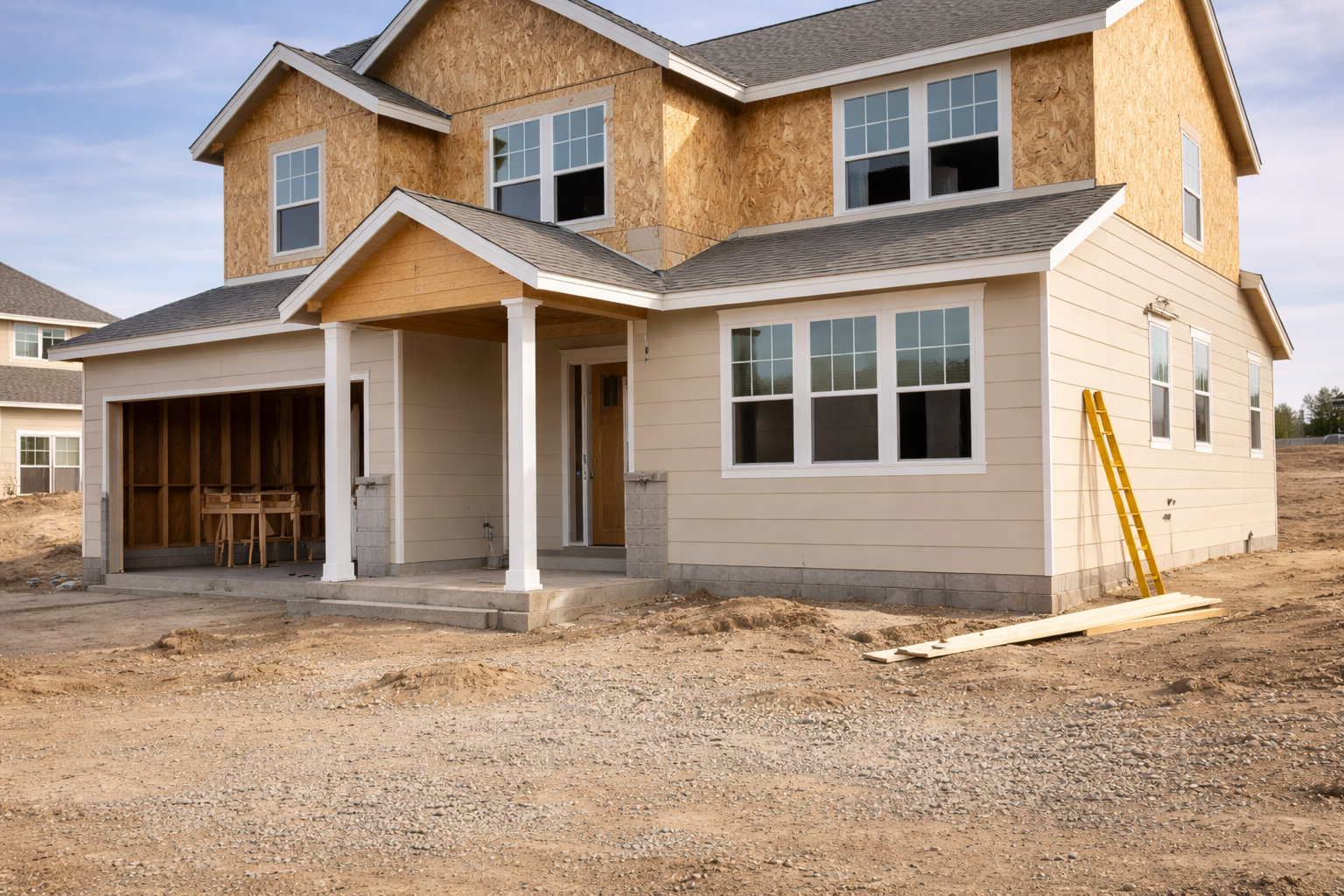
Understanding the “NH” Designation in Mississippi: What It Means—and What It Requires
In Mississippi, the “NH” (New Home) designation is more than an added credential. It represents a higher level of qualification for inspectors who evaluate newly constructed homes—and it carries specific requirements that set it apart from a standard home inspection license.
At its core, the NH designation reflects an important reality:
New construction demands a deeper understanding of how homes are built and how they are expected to perform.
What the NH Designation Requires
Unlike general home inspection licensing, the NH designation in Mississippi requires the inspector to meet additional professional benchmarks. These include:
- Holding (or qualifying for) a Mississippi residential builder’s license, and
- Maintaining code certification in an approved discipline (as recognized by the state)
These requirements are outlined through the Mississippi Home Inspector Board and can be found on the state’s official forms and guidance pages.
This is a significant distinction.
It means that an NH-designated inspector is not only trained to observe a home, but also has formal grounding in construction practices and building code frameworks. That elevated background is intended to improve the inspector’s ability to evaluate new construction at a higher level.
What the Public Should Understand
Even with these added qualifications, an NH inspector is still performing a home inspection, not acting as a builder, engineer, or code enforcement official.
The inspection remains:
- Visual and non-invasive
- Limited to readily accessible systems and components
- Focused on identifying observable conditions and potential concerns
The NH designation enhances the inspector’s ability to recognize issues in new construction—but it does not convert the inspection into a code compliance inspection or a construction guarantee.
That distinction is important for both inspectors and clients.
Where the Role Can Become Blurred
Because NH inspectors often have builder licensing and code knowledge, their reports can begin to sound more authoritative. They may describe installation practices, reference typical construction standards, or explain how a system is expected to perform.
This is valuable information—but it must be communicated carefully.
An inspector’s role is to identify and explain risk, not to declare outcomes with certainty or assume responsibility for how something should have been built.
For example:
- A statement such as
“This condition can lead to moisture accumulation due to limited drying potential.”
explains a recognized concern based on known building behavior. - A statement such as
“This condition will cause structural damage.”
crosses into prediction and certainty, which is beyond the scope of a home inspection.
The difference may appear subtle, but it carries weight in how the report is interpreted by clients, contractors, and, in some cases, legal professionals.
The Role of Climate and Location
Mississippi spans multiple climate influences, generally falling within Climate Zones 2 and 3, with portions of 4. This matters more than many realize.
The same construction detail can perform differently depending on where the home is located within the state:
- In more humid regions, moisture from the crawl space or exterior air may be the primary concern
- In cooler or mixed regions, seasonal vapor movement from the interior may become more significant
For NH inspectors working across different parts of Mississippi, climate awareness is essential. It helps ensure that observations are interpreted within the correct environmental context.
A condition that poses minimal concern in one part of the state may be higher risk in another.
Guidance for NH Inspectors
For inspectors pursuing or maintaining the NH designation, the expectation is not simply to “know more,” but to apply that knowledge appropriately.
A well-balanced approach includes:
- Clearly describing observed conditions
- Explaining potential implications based on known patterns
- Avoiding definitive predictions about future performance
- Recognizing the influence of climate and construction type
- Recommending further evaluation when conditions warrant
This approach allows the inspector to provide meaningful insight while remaining within the intended scope of the profession.
A Balanced Perspective
The NH designation represents a meaningful step forward in elevating the quality of new home inspections in Mississippi. By requiring builder licensing and code certification, it strengthens the inspector’s understanding of the built environment.
At the same time, it is important to maintain clarity about the role itself.
An NH inspector brings increased knowledge and awareness to the inspection process—but still operates within the framework of a home inspection, not as the party responsible for construction or enforcement.
Closing Thought
A strong inspection report does more than list findings. It helps the client understand what was observed, why it may matter, and what steps to consider next.
The NH designation supports that goal by equipping inspectors with deeper insight into construction and code-related issues. When combined with clear, measured communication—and an awareness of Mississippi’s varying climate conditions—it allows inspectors to provide valuable, informed guidance while maintaining professional boundaries.
That balance is essential to serving the public and strengthening confidence in the home inspection profession.